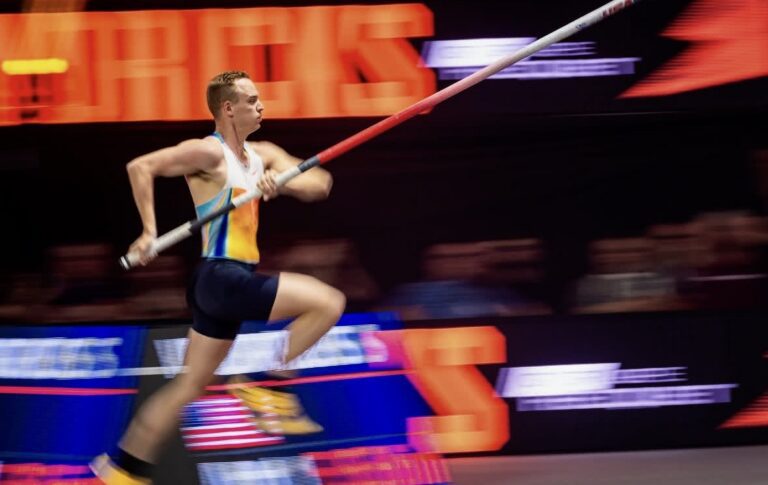
A broken implement mid-season isn’t just a budget line item; it’s a compromised career. You’ve likely felt the frustration of watching a vaulting pole lose its response or a discus fail after a routine landing. High-performance programs shouldn’t have to choose between elite results and gear that survives the bus ride. Finding truly durable track and field equipment requires looking past the glossy finish to the structural integrity beneath. It’s about securing implements that maintain their aerodynamic profile through thousands of repetitions. Built for the throw. Engineered for the landing.
We agree that your athletes’ safety and your program’s longevity depend on precision engineering. This guide reveals the 2026 material science and engineering standards that define professional-grade gear. You’ll learn how advanced composites and proprietary designs prevent premature wear while maintaining peak performance. We’ll preview the latest NFHS and NCAA compliance requirements, ensuring your equipment stays legal and lethal on the field. From the resilience of FiberSport Poles to the impact-resistance of RockBack Bags, we’re detailing the tech that keeps you in the hunt for the podium.
Key Takeaways
- Understand why advanced materials like S-Glass and carbon fiber are essential for maintaining structural integrity and high strength-to-weight ratios in elite implements.
- Identify the true definition of durable track and field equipment as gear that preserves its technical specifications and aerodynamic profile through thousands of high-stress cycles.
- Learn to evaluate discipline-specific resilience, from the flex rating stability of vaulting poles to the rim-weight consistency of competition-grade discus implements.
- Discover how specialized storage and transport solutions, such as protective cases and RockBack bags, prevent the micro-stresses that lead to mid-season equipment failure.
- Align your program with 2026 engineering standards that prioritize athlete safety without sacrificing the precision required for record-breaking performances.
The Hidden Cost of Low-Quality Track and Field Gear
In the high-stakes environment of Track and field, gear failure is a performance killer. True durable track and field equipment isn’t just about surviving a drop. It’s an engineering standard where an implement maintains its exact technical specifications under repeated, violent stress. When a discus hits the cage or a pole bends to its limit, the material must return to its original state without microscopic degradation. Choosing budget gear is a false economy. You save money today; you pay for it mid-season with broken implements and demoralized athletes. It’s a cycle of replacement that drains budgets and stalls progress.
Safety is the non-negotiable factor. Aging or low-quality materials don’t just fail; they fail catastrophically. A compromised vaulting pole or a fractured throwing implement isn’t just a loss of inventory. It’s a risk to the athlete’s physical security. Performance-grade durability balances this structural integrity with elite weight ratios. It ensures gear is light enough for a world-class mark but strong enough for a thousand training sessions. Precision for the athlete. Protection for the program.
Why Material Fatigue Matters in Competition
Material fatigue is the invisible enemy of the elite athlete. Every time a pole vaults or a javelin lands, microscopic stress fractures can develop. These tiny cracks disrupt energy transfer. They steal centimeters from a throw or height from a jump. Standard equipment often succumbs to environmental factors like high humidity or UV exposure, which makes fiberglass brittle over time. For the athlete, a consistent feel is vital. If the equipment changes its flex or weight distribution due to wear, it destroys the muscle memory built through months of preparation. You can’t train for excellence on gear that changes every week.
The ROI of Investing in Elite Hardware
Investing in elite hardware is a financial strategy for long-term success. High-performance composites outlast entry-level materials by multiple seasons. This longevity significantly reduces the total cost of ownership for schools and clubs. Consider the benefits of high-end implements:
- Extended Lifespan: High-performance materials resist the “dead” feel that plagues budget gear after one season.
- Reduced Replacement Cycles: Invest once in quality rather than twice in mediocrity.
- Secondary Market Value: Well-maintained, professional-grade gear remains a liquid asset for your program.
Instead of replacing a full set of implements every twelve months, you invest in gear that survives the rigors of transport and competition. High-end equipment like the 2026 FiberSport ORBIT Discus or the FiberSport Pole holds its value because the engineering is built to last. It turns a yearly expense into a multi-year asset.
Material Science: What Makes Track Equipment Truly Durable?
Engineering excellence is the bedrock of athletic performance. For durable track and field equipment, the choice of raw materials dictates the lifespan and reliability of the tool. In vaulting pole construction, manufacturers rely on S-Glass and E-Glass composites. E-Glass provides a reliable baseline for training. S-Glass offers significantly higher tensile strength and a higher modulus. This allows the pole to absorb immense kinetic energy and return it with explosive precision. Carbon fiber reinforcement further elevates these implements. It provides a high strength-to-weight ratio that allows elite athletes to move faster without sacrificing structural safety. It’s the difference between a tool that survives the season and one that thrives through it.
Modern equipment housings and implement rims also utilize high-impact polycarbonates and stainless steel. These materials resist the denting and cracking common in high-impact events. Whether it’s the housing of a timing device or the rim of a discus, these components must meet rigorous NCAA equipment specifications to ensure fair and safe competition. Stainless steel is particularly valued for its corrosion resistance and density. It provides the necessary rim weight while standing up to the abrasive nature of various landing surfaces. It protects the core of the implement from the shock of impact. Strength and balance. Resilience and results.
The Evolution of Composite Engineering
The shift from traditional materials to modern aerospace-grade composites has redefined what athletes can achieve. Modern manufacturing uses multi-layered wrap technology to prevent delamination. This process bonds layers of fiberglass and carbon at a molecular level. It ensures the implement acts as a single, unified structure rather than a collection of independent layers. This engineering prevents the internal shearing that often leads to catastrophic failure in lower-quality poles. Tensile strength is the maximum stress a pole can withstand while being stretched or flexed before it reaches the point of structural failure. By optimizing these composite layers, engineers create a tool that is both resilient and predictable.
Aerodynamics Meets Structural Integrity
True durability must coexist with flight physics. The 2026 FiberSport ORBIT Discus is a prime example of this fusion. It utilizes proprietary engineering to resist warping, even after thousands of high-velocity impacts into the cage or ground. The surface finish and material hardness are critical. A harder surface maintains its aerodynamic integrity by resisting the nicks and scratches that increase drag over time. Precision-balanced implements ensure that every practice session mirrors competition conditions. If you’re looking to upgrade your team’s arsenal, you can explore the latest engineering in FiberSport implements to see these materials in action. Consistency in the hand leads to consistency in the air. When an implement maintains its shape and balance, the athlete can focus entirely on technique.
Evaluating Durability Across Core Track Disciplines
Identifying durable track and field equipment requires a discipline-specific lens. A hurdle needs impact resilience; a pole needs elastic memory. For outdoor implements, weather-resistant coatings are mission-critical. They protect the core materials from oxidation and UV degradation. This ensures that gear used in August 2026 remains compliant with World Athletics technical rules through several seasons. Without these protections, even the most expensive implements quickly become illegal for sanctioned competition due to weight loss or surface pitting.
Facilities with high athlete traffic demand structural overkill. Hurdles must withstand repeated impact without losing height-adjustment precision. Starting blocks require heavy-duty rail systems and stainless steel components to resist the torque of an elite start. Budget blocks often warp under the explosive power of collegiate sprinters. Engineering for longevity means choosing hardware that maintains its structural integrity under maximum load. Precision engineering meets rugged utility. Built for the daily grind. Designed for the championship mark.
Vaulting Poles: Flex Ratings and Longevity
A high performance pole vault pole is a high-strain energy storage device. Its durability is tied directly to its elastic limit. If a pole is pushed beyond this limit, the fibers begin to fatigue. Elite poles require specialized manufacturing to ensure weight-rating accuracy remains consistent over time. When inspecting your inventory for surface damage, follow this protocol — or reference a complete pole vault equipment checklist to ensure every component from tip to grip tape meets 2026 NFHS and NCAA compliance standards:
- Visual Scan: Check for any deep scratches or “nicks” that penetrate the outer resin layer.
- Tactile Inspection: Run a gloved hand along the shaft to feel for subtle flat spots or delamination.
- Flex Consistency: Verify that the pole still responds with the same “snap” as when it was first unboxed.
Maintaining a FiberSport Pole involves protecting the surface from the abrasive grit of the runway. Even a small scratch can become a failure point under the extreme tension of a vault.
Throwing Implements: Precision Under Pressure
In the throwing circle, durability is measured by rim-weight stability. The FiberSport orbit discus is engineered to survive the violent deceleration of hitting the ground or cage. Center-of-gravity testing ensures the implement remains legal through years of use. If the internal weights shift even a millimeter, the flight path becomes unpredictable. This precision extends to the FiberSport ORBIT JR, which provides younger athletes with the same professional-grade engineering found in senior implements. Consistent practice requires a consistent tool. When you choose implements with a high rim-weight percentage and reinforced plates, you’re securing a multi-season asset. High-impact resilience. Aerodynamic integrity. Absolute confidence.

Maximizing Equipment Lifespan: Maintenance and Protective Storage
The structural integrity of durable track and field equipment is often compromised long before a competition begins. It is a failure of logistics. High-performance gear is engineered for specific athletic loads; it is not built to survive the haphazard stacking of a luggage bay or the constant vibration of a cross-country transit. Even the most resilient carbon fiber implements can develop microscopic fractures when subjected to the blunt force of improper handling. Protection is not an accessory. It is a fundamental requirement for equipment longevity. Secure your gear. Safeguard your season.
Programs that ignore protective protocols face a cycle of premature failure. This leads to budget exhaustion and compromised athlete safety. When implements are left exposed to the elements or tossed into generic bins, their precision-balanced profiles begin to degrade. Maintaining the 2026 standard of excellence requires a dedicated approach to how gear is housed and moved. It’s about maintaining the “factory-new” response through years of heavy use. Engineering doesn’t stop at the implement; it extends to the barrier you put between that implement and the world.
The Science of Safe Transport
Airline travel presents a unique set of stressors for composite materials. Sustained high-frequency vibration can induce micro-fatigue in fiberglass and carbon shafts, leading to a loss of elastic response. Utilizing specialized pole vault cases for transport is a mandatory safeguard for elite programs. A dedicated airline approved pole vault case provides the rigid shielding necessary to deflect external pressure and absorb baggage-handler impact. Hard-shell cases are superior to soft bags because they provide a crush-proof barrier that prevents the implement from becoming a structural casualty of the journey. For programs navigating the increasingly complex carrier restrictions of 2026, understanding how to fly with pole vault poles across major airlines is now a mission-critical logistics skill. Protect the flex. Secure the flight.
On-Field Protection and Storage
Protecting smaller implements requires equal diligence on the field. Specialized athlete gear bags for track and field organize and shield discuses and spikes from environmental damage. RockBack Bags are engineered to repel moisture and prevent abrasive track surfaces from scarring precision-balanced equipment. After use in wet or sandy conditions, implements must be wiped clean to prevent oxidation and weight-altering buildup. Maintain storage at stable temperatures. Extreme cold makes composites brittle; excessive heat can cause expansion that compromises internal bonding. Follow this routine maintenance schedule for high-performance hardware:
- Post-Session: Wipe down throwing implements with a soft, dry cloth to remove moisture and corrosive sweat.
- Monthly: Inspect fasteners on hurdles and starting blocks to ensure they meet original torque specifications.
- Bi-Annually: Conduct a full center-of-gravity check on all throwing implements to verify they haven’t shifted during high-impact use.
Secure your equipment with professional-grade protection. Browse the FiberSport USA storage collection to safeguard your program’s assets and ensure your gear is ready for the podium.
FiberSport USA: Engineering the 2026 Standard of Excellence
FiberSport USA represents the definitive fusion of veteran expertise and bold engineering innovation. We don’t just manufacture gear; we build the critical safeguards that protect an athlete’s ambitions. Our 2026 line of durable track and field equipment is the result of a relentless pursuit of perfection. Every implement is designed to meet the highest standards of structural integrity and performance precision. We prioritize security because we understand the stakes of elite competition. It is engineering you can trust. It is performance you can feel. Built for the bold. Engineered for the win.
Our award-winning design philosophy centers on the dual benefits of resilience and movement. We’ve established a national dealer network to ensure coaches and athletes have access to expert guidance during the selection process. This personalized approach allows programs to secure implements tailored to their specific technical needs. Whether you’re managing a collegiate roster or a high school program, our infrastructure supports your pursuit of excellence. Reliability is our baseline. Innovation is our drive.
The Athlete-First Engineering Philosophy
We believe the best equipment is forged in the heat of real-world competition. FiberSport designs implements based on direct feedback from championship vaulters and elite throwers. This “athlete-first” methodology ensures that our hardware solves practical problems on the field. The craftsmanship behind every FiberSport Pole and 2026 FiberSport ORBIT Discus is mission-critical. We focus on the microscopic details of resin bonding and weight distribution so you can focus on your mark. Our gear is built to handle the high-strain energy of the final attempt. Precision in the factory. Power on the runway. Protection for the athlete.
Equipping Your Team for Success
Success requires a comprehensive strategy for equipment procurement. We streamline the process for bulk team orders, providing specialized support to help programs maximize their budgets. Our hardware line is complemented by FiberSport Apparel and RockBack Bags, creating a unified ecosystem of high-performance gear. Every accessory follows the same rigorous engineering standards as our primary implements. We invite you to explore the full 2026 product line and experience the difference that professional-grade engineering makes. Don’t settle for gear that just survives the season. Choose the gear that defines it. Upgrade your performance with FiberSport USA today.
Engineering the Next Record: Secure Your Program’s Legacy
True durability in track and field is a product of material science and disciplined maintenance. We’ve explored how aerospace-grade composites like S-Glass and carbon fiber maintain the structural integrity required for elite performance. You’ve seen that the most durable track and field equipment isn’t just a purchase. It’s a long-term investment in athlete safety and seasonal consistency. Protecting that investment requires specialized solutions. Hard-shell cases and RockBack bags are essential for the rigors of travel. They prevent the micro-fatigue that leads to mid-season failure.
FiberSport USA stands as a steadfast protector of your team’s ambitions. Our award-winning engineering and design are trusted by elite athletes and coaches nationwide. We provide specialized RockBack protection for traveling athletes. This ensures your gear arrives ready for the podium. Don’t leave your results to chance with hardware that degrades under stress. Secure your program with implements built to last. Precision for the factory. Power on the runway. Protection for the athlete.
Shop FiberSport USA: Precision-Engineered Track Gear
The runway is ready. The circle is waiting. Equip your team with the precision they deserve and watch them redefine what’s possible.
Frequently Asked Questions
What makes track and field equipment truly ‘durable’ for school use?
True durability for school programs is defined by an implement’s ability to maintain its technical specifications under the stress of multiple users. High-frequency use requires materials that resist the abrasive nature of track surfaces and high-impact landings without losing their aerodynamic profile. Durable track and field equipment must preserve its original flex and weight distribution through thousands of cycles to remain a viable asset for a multi-season budget.
How often should competitive pole vault poles be replaced?
Replacement cycles are dictated by the frequency of use and the results of rigorous safety inspections. While a high-quality pole can last several seasons, it should be retired immediately if it shows surface nicks deeper than the outer resin layer or a softening in its flex response. High-traffic programs often replace primary training poles every three to five seasons to ensure athlete safety and performance consistency. Stay vigilant. Inspect often.
Are carbon fiber throwing implements more durable than steel ones?
Carbon fiber offers superior resistance to permanent deformation compared to traditional steel shells. While steel implements can dent or warp upon impact with a cage or hard ground, carbon fiber maintains its precise shape through high-velocity collisions. This resilience preserves the implement’s flight integrity over time, though carbon fiber requires more diligent protection against sharp, localized impacts during transport. Precision meets power.
What is the best way to transport track equipment on a plane?
Rigid, hard-shell cases are the only reliable solution for air transport. These containers are engineered to dissipate impact energy and shield delicate composites from the crushing pressures found in commercial luggage compartments. Soft bags don’t provide the structural barrier necessary to prevent micro-fractures during transit. Use airline-approved cases to ensure your gear arrives at the meet in competition-ready condition. For a complete breakdown of carrier policies and step-by-step airport protocols, consult the 2026 athlete’s logistics guide on how to fly with pole vault poles. Protect the assets. Secure the win.
How do environmental factors like heat affect the durability of track gear?
Sustained high temperatures can soften composite resins and lead to material expansion that compromises internal bonding. UV radiation is equally damaging, as it makes fiberglass and carbon fibers brittle over time. Utilizing implements with weather-resistant coatings and maintaining climate-controlled storage is essential for preserving the lifespan of your hardware. Heat degrades. Protection preserves.
What should I look for in a high-performance track and field equipment supplier?
Prioritize suppliers that offer engineering transparency and a proven national dealer network. A reputable provider should give you detailed material specifications and clear performance data for every implement. Look for a partner that understands the “athlete-first” philosophy and provides professional-grade gear backed by technical expertise. It’s about finding a steadfast protector for your program’s goals. Trust is built on precision.
Can durable equipment actually improve an athlete’s performance stats?
Consistency in the implement leads to consistency in the mark. When an athlete knows their gear won’t flex or warp unpredictably, they can focus entirely on their technical execution. Durable track and field equipment removes the variable of mechanical failure, allowing for the repeatable movements necessary to set new personal records. Confidence is the byproduct of reliable engineering. Better gear. Bigger marks.
How do I know if my track gear is still safe for competition?
Safety is confirmed through a combination of visual and tactile inspections. Check for signs of surface delamination, internal rattling in throwing implements, or any deviation from the original weight and balance requirements. If an implement no longer meets the technical rules of governing bodies like the NCAA or World Athletics, it must be removed from the rotation. Safety is non-negotiable. When in doubt, swap it out.